Tuesday, 26 July 2011

Mata Kali

Mata Kali


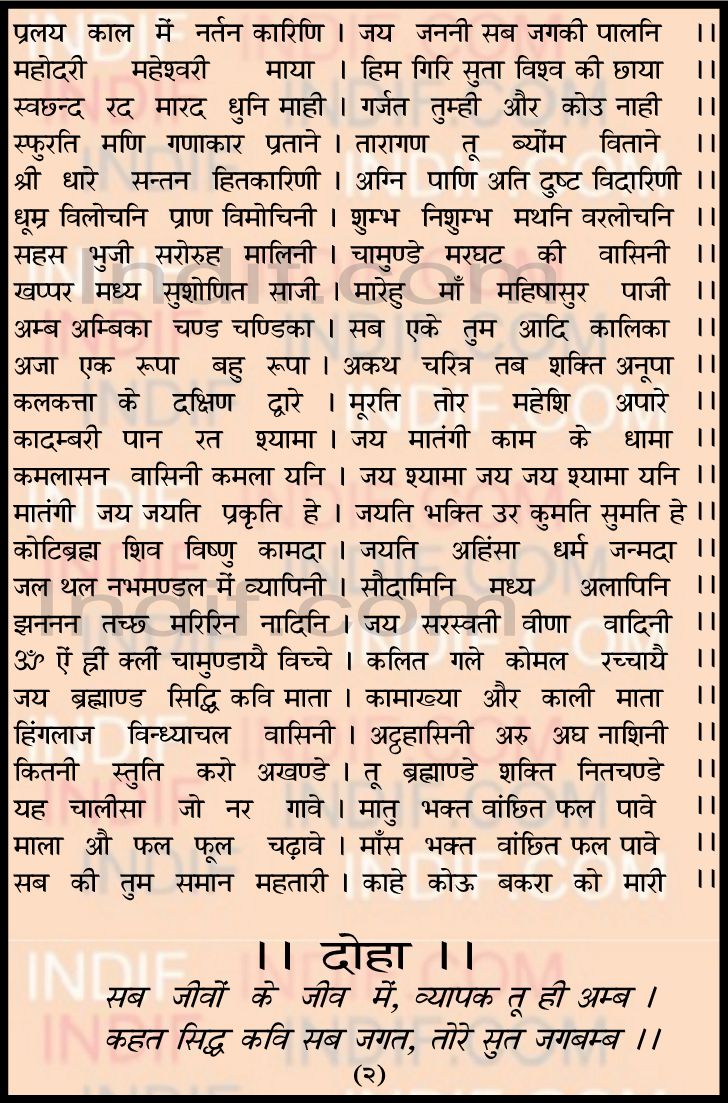
Shri Kali Chalisa
Maha Kali is the fiercest form of Shakti or Durga, in the Hindu religion. Goddess Kali is the destroyer of evil. But Kali is also a compassionate mother who loves her sincere children. Kali is usually worshipped by tantriks to achieve "siddhis". Kali is the slayer of ego as well. Maha Kali Mantra forms part of the prayers offered to the goddess. Goddess Kali Mantra or Mantras for Maa Kali are given below:

Kali Mantra

"Atha Kalimantraye Sadyovaksiddhiprapyivan
Aravitairyah Sarvestam Prapnuvanti Jana Bhuvih"


"Savaruhaammahabhimaghoradanshtram Hasanmukhim
Chaturbhujamkhadagmundavarabhayakaram Shivam
Mundamaladharamdevi Lolajihvandigambaram
Evam Sanchintayetkalim Shamasanalayavsinim"

"Kreem Kreem Kreem Hreem Hreem Hoom Hoom Dakshine Kalike
Kreem Kreem Kreem Hreem Hreem Hoom Hoom Swaha"

Durga Mantra


Durga Mantras dedicated by Shri Adi Shankaracharya


1.

English wording
Na mantram no yantram tadapi cha na jane stutimaho Na chavhanam dhyanam tadapi cha na jane stutikathah I
Na Jane mudraste tadapi cha na jane vilapanam Param jane matastvadanusaranam kleshaharanam II 1 II


English meaning
O Mother ! Neither I know any incantation nor I have any mystical talisman. Why ? I don't know any hymn either. I have no idea how to invoke you or how to meditate on you. Neither I know your story nor your glory, nor I know your various postures nor I am given to weeping in distress. But one thing I know for certain that seeking shelter under your protection, and following your order, is definitely going to end all afflictions.


2.

English wording
Vidheragyanen dravinavirhenalasataya Vidheyashakyatvattva charanyorya chyutirbhut I
Tadetat kshantavyam janani sakaloddharini shive Kuputro jayet kwachidapi kumata na bhavti II 2 II


English meaning
O Loving Mother, ensuring redemption to all afflicted, I know not how to worship. Neither have I resources nor temperament-for I am callous by nature-nor the special knowledge to conduct thy worship. But in rendering service unto you if I have committed any lapses or mistake-forgive me Mother ! For there could be a bad son but never a bad mother !
.

English wording
Prithivyam putraste janani vahavaha santi saralah Param tesham madhye viralataraloaham tava sutah I
Madi yoayam tyagah samuchitamidam no taya Shive Kuputro kwachidapi kumata na bhavati II 3 II


English meaning
O Mother ! This earth is full of your many a simple hearted and even minded sons but among them I am the most fickle and of unsteady mind. Rarely there may be one like me. But still, O Shive ! Your casting me away is not proper for in this world-there could be a bad son but never a bad mother !


4.

English wording
Jaganmatarmatastava charanseva na rachita Na va duttam Devi dravinamapi bhooyastava maya I
Tathapi tvam sneham mayi nirupam yatprakurushe Kuputro jayet kwachidapi kumata na bhavati II 4 II


English meaning
O Mother of the World ! I never rendered any service unto you, Devi ! Never did I offer any money to you. But still you shower affection on me because in this world there could be a bad son but never a bad mother !


5.

English wording
Parittyakta Deva vividhavidhisewa kulataya Maya Panchasheeteradhikamapneete tu vayasi I
Idani chenmatastava yadi kripa napi bhavata Niralambo lambodar janani kam yami sharanam II 5 II


English meaning
O Mother Parvati, bearing a son Shree Ganesh (while worshiping other gods) I had to remain restively busy. Hence despite my becoming eighty five years old I have stopped worshiping other Gods. Now I cannot ritually worship them. Consequently I don't expect any help from them. In such a situation I am totally helpless. Who else but you should I seek shelter in for I have no hope from any other (God).


6.

English wording
Shwapako jalpako bhavti madhupako magira Niratanko ranko viharati chiram kotikanakaih I
Tavaparne karne vishati manvarne phalamidam Janah ko janeete janani japaneeyam japvidhhau II 6 II


English meaning
O Mother Aparna ! Even if one word of your holy incantation that falls in the ear of a foolish rascal it is enough to make him utter sweet speech like a seasoned scholar; a pauper then becomes rich owning millions of gold coins and enjoying life with all its pleasures till ripe old age. When listening to one word can work such wonders, who can surmise the reward reaped by those constantly chanting your name with full ritual of worship ?
.

English wording
Chitabhasmalepo garalamashanam dikpatdharo Jatadhari kanthe bhujagapati hari Paushupatih I
Kapali bhootesho bhajati Jagdeeshai ka padavin Bhavani tvatpanigrahan paripati phal midam II 7 II


English meaning
O Bhavani ! He who keep their body ever smeared with the ashes of the dead-bodies; who eats poison for food, who ever remains without a covering (or naked); who has tangled hair on head and the serpent king Vasuki garlanding his neck; who has a cupal like receptacle (for begging) in his hands-if such a Bhootnath (Lord of Ghosts, Lord Shiva) Pashupati (Lord of Animals) is crowned with a title of Jagdeesh, then what is the reason behind it ? How he came to acquire such importance ? An obvious consequence of his marrying you, O Goddess !


8.

English wording
Na mokshasyakancha bhavavibhavavancha cha na mey Na vigyanapeksha shashimukh sukheccha na punah I
Atastvan sanyache janani jananam yatu mum vai Mridani Rudrani Shiv-Shiv Bhavaneeti japatah II 8 II


English meaning
O Mother, with face bedight with moon grace, I neither long for Moksha (Salvation of Soul) nor for worldly riches nor hope to acquire any proficiency in sciences nor have a yearning for pleasure ! My only request to you is to allow me pass my life chanting "Mridani Rudrani Shiva-Shiva Bhavani ever.

9.

English wording
Naradhitasi vidhina vividhopachareh Kim rukshachintak pareirna kritam vachobhib I
Shayme tvameva yadi kinchan maiyyanathe Dhatse kripamuchitalam param tavaiva II 9 II


English meaning
O Mother Shyama ! Never could I worship you with complete ritual and lots of offerings. Ever engrossed in harsh words, which crime did my speech not commit ? Still if you care, on you own, to me-a shelterless orphan-this act of yours is meet for you. Only a kind hearted mother like you can provide shelter to such a bad son as I am.


10.

English wording
Aapatsu magnah smaranam tvadeeyam Karomi Durge karunarna veshi I
Naitaccha thatvam mum methah Kshudhartrisharta jananim smaranti II 10 II


English meaning
On Mother Durga ! O Kind-Hearted Great Goddess ! If I remember you after falling in trouble (and not before)-please do not treat me like a deceitful rogue-because all children clamour for mother when they are thirsty or hungry (distressed).


11.

English wording
Jagdamb vichitramatra kim Paripoorna karunaasti chenmayi I
Aparadha parampara param Na hi Mata samupekshate sutam II 11 II


English meaning
O Jagdambe (Mother of the World). That you still show your full favour to me should not cause any surprise. For even if a son be bent on committing sin after sin. Still his mother does not neglect him.


12.

English wording
Matsamah palaki nasti papaghni twatsama na hi I
Evam gyatva mahadevi yatha yogyam tatha kuru II 12 II


English meaning
O Great Goddess ! There is no one greater sinner than I am and no one greater sin-destroyer as you are deeming so, kindly do whatever you think proper !
    

Simhachalam Sri Varaha Lakshmi Narasimha swami - Chandanotsavam

Simhachalam Sri Varaha Lakshmi Narasimha swami - Chandanotsavam

by Mantra & shlokas on Saturday, May 7, 2011 at 12:53pm


ri Lakshmi Nrusimha Mamdehi Karavalmbam!
Human body with lion's head forms the Sacred appearance of the Narismha Perumal who is Lord Sree Mahavishnu's fourth Incarnation. The major reason which led to this incarnation is  vanquish evil tyrants and protect the pious beings. In order not to fail lord Brahma's words, Perumal out of His causeless mercy has incarnated in this unique form.
The story behind the Incarnation:


King Hiranyakashipu undergoes many years of great austerity and penance to Lord Brahma and attains a boon of becoming immune to death by any of the entities created by Brahma. Intoxicated by the  boon, he starts to persecute people in all worlds (including earth and heavenly planets). As the sufferings became unbearable, the people from the three lokas (Bhu, suvar, pathala) approach Lord Vishnu and request Him to put an end to this cruelty.


To relieve the Lokas from the oppression of the demon Hiranyakashipu without crossing against the boons as given by Brahma, the Lord Maha Vishnu takes the form of Narasimha (Half Lion-Half Man).
Reason for the Sandalwood paste (Chandanam)

The Ferocious appearance of Perumal killed the demon Hiranyakashipu. The battle was so fierce that even after crushing the demon, perumal did not return to his pleasant form (santha swaroopam). His ferocious form is very frightening for all beings including lord Brahma.  Various prayers from Brahma, all the gods and even the devotee Prahaladha could not help to calm down from the ugra swaroopam (Ferocious appearance) of the perumal. Then Lord Brahma remembers the Sacred tree Srichandana Vruska (Sandal wood tree) which has the ability to reduce ferocity, anger and heat and suggests Bhaktha Prahaladha to apply the sandalwood paste to perumal.
Prahaladha followed the instructions of Brahma and applied  Srichandanam (sandal wood paste) to the Lord. The tender fragrance has made the ferocious perumal to attain His normal state (santha swaroopa).

Further, Prahaladha applies the chandana (Sandal wood paste) to Perumal along with his devotional prayers which made Perumal to completely remove his ugra swaroopam and accept the santha swaroopam. As a tribute to  God’s kindness towards his Bhakthas, Prahaladha has  set up the idols of Lord Narasimha and Lord Maha Vishnu at many places among which the temple at Simhagiri stands as the first to be setup(Prathishta) by Prahaladha which is now called as simhachalam (The Hill of Lion Lord).
Importance of Chandanotsavam: How it is performed?
Every year on Vaisakaha sudha Thadhiya, Narasimhar perumal is offered the sacred Chandanotsavam. Perumal is covered by chandanam (Sandal wood paste) throughout the year except this day. Chandanam is removed, and after removal we can see His nija roopam (True form) where the bhakthas are allowed to get the darshan for 12hours which stands as a highlight of the event.
The night before Vaisakha sudha Thadhiya the old Chandnam paste will be removed, and in the early hours of Vaisakha sudha Thadhiya perumal is offerd with Sahasra Ghatabhiskekam (Abhishekam from thousand sacred pots) and special aaradhanas followed by the sacred incense and the special lightings.
Bhaktha janas are then allowed to view the nija roopa of the perumal. Firstly Perumal gives first appearance to current descendant of Vijayanagara king (Pusapaati) and later on all the devotees are allowed for the darshan.
This Nijaroopa darshanam which is held only once in a year attracts many people from around the world. In spite of having the very hot climate, these eternal hurdles cannot stop the bhakthas to reach the Simhachalm and attain the Lord's darshanam.

To maintain kind pleasant form of the Lord, the idol is again covered by the chandanam in the evening. This entire process is referred to as Chandanotsavam.  Correspondingly after the Vaisa:kha Thadhiya, Jye:shta, asha:da, sra:vana pournami days are marked to apply the Chandanam layers again to the perumal. Approximately 1200grm of Chandanam paste will be applied in each of the four months.
As per the sastras, Upon application of the chandana paste on Vaisakha sudha thadhiya, devotees become recipients of lord maha Vishnu's grace, this is the reason that though the Nrusimha Incarnation has originated on Vaiskha sudha chathurdhasi, chandanotsavam is performed on the Vaisakha Sudha Thadhiya.

For Chandanotsavam the Pure sandal paste is taken from best quality sandalwood, and special people are delegated for the task. The old Chandanam paste which is removed from the perumal will be offered to the Devotees as Prasadam which on applying would make them fulfill all their desires (kamithartham Money,health,prosperity..or Moksha).
Divine appearance of Lord at Simhachalam:

 Though Deity at Simhachalam is Nrusimha perumal, the divine form is in the shape of Varaha avataram which is the reason why the perumal is called The “varaha Lakshmi Narasimha perumal”. Usually the Holy temples are faced towards east, where as this temple faces the west which marks another specialty of simhachalam. In Local tongue. perumal is called ‘Apanna’. The usual offerings to Lord Varaha Narasimha are a Young cow with her calf. Those young cows and calf are referred to as Appanna and will receive the special honours as gangireddu (The decorative form of bull usually seen at the time of sankranthi), They are also applied with chandhanam paste along with the Prayers.


Simhachalam therefore stands out as one of the unique pilgrimage spot to attain Lord Vishnu's Grace, and Chandanothsavam and Nijaroopa Darsanam are the best days to visit.

Shri Baba Balak Nathji

It is well known that Lord Ganesh is the son of Shiva and Mata Parvati and the younger brother of Shri Baba Balak Nathji also known as Kartikey, Skand, Kumar, Subrahmanya, Murgan and many other names at numerous locations in India. According to Puranas, reincarnations of Shri Baba Balak Nathji during Satya Yug was Skand & Kartikey, in Treta Yug – Sukhdev Swami, in Dvapar Yug – Sukhdev Swami, Manikant and in Kali Yug – Sukhdev Swami, Swami Ayy Appa and Shri Baba Balak Nath Ji. Shri Baba Balak Nath Ji is worshiped throughout country under different names. Baba Balak Nath Ji is a Maha Yogi and basically the story of Baba Balak Nath Ji begin with his pilgrimage to the Himalayas where He meets with His parents – Mata Parvati and the great Lord Shiva.

Baba Balak Nath Ji possessed the knowledge of a Maha Yogi upon his birth and many devotees throughout the world chants His name and does His worship. The Sidhpeeth of Baba Balak Nath Ji is based on the “Siddha Traditions”. The Sidhpeeth is one of the utmost famous piet places of India in the hill State of Himachal Pradesh – which is also known as Pawansthali and God’s own land. The Temple of Baba Balak Nath Ji and Cave (Gufa) graces the Deot Sidh in Hamirpur District of Himachal Pradesh. Devotees from India and abroad refers this Temple to reinforce firm faith in the Siddha Tradition. We attempt to put a few of these on our Website, along with the system of worship and spirtualism.

Miracles in Shah Talai :
Baba Balak Nath Ji, is told to came to Bachhretu Mahadev from Kurukshetra where he had come with saints at the time of Solar Eclipse. Thereafter, Baba Ji came to Shaha Talai and met ‘Ratno Mai’ - the epitome of ‘Dwapra’s old woman, who had guided ‘Mahakaul Baba Ji’. Thus Baba Ji was to compensate, what that old woman had done for Him in ‘Dvapra Yuga’. So Baba Ji took the most inconvenient work of cow-grazing from Ratno Mai.

Vat Vriksh Tapsya Sathali of Baba Balak Nath Ji at Shah Talai :

There was a Banyan Tree, below which Baba Ji made his shelter and told Ratno Mai that He would meditate below Banyan Tree and graze the cows side by side. He asked her to leave the Roti and Lassi there for taking by Him after meditation. Baba Ji committed with Ratno Mai to work for her so long she would remain satisfied. Everything remained smooth till twelve years. People started complaining the damage to crop field by the cows by the end of 12th year. 


atno Mai used to ignore such complaints; but the complaint of village Pardhan broke the patience of Ratno Mai and she started rebuking Baba Ji. At this, Baba Ji took Ratno Mai and village Pardhan alongwith other people to the field and saw the said spot where there was no damage at all. Everybody was taken aback by this miracle. Baba Ji came back to His place of worship and asked Ratno Mai to take back her cows and let Him go His way. Ratno Mai out of motherly affection/attachment tried to persuade Baba Ji and reminded Him about her providing Roti and Lassi for 12 years.

Babal Balak Nath ji is a Punjabi and Hindu deity worshipped in the northern Indian states of Punjab and Himachal Pradesh. The shrine is known as "Deotsidh". Baba balak Nath ji''s Temple is situated at village Chakmoh of district Hamirpur on the hill top. The temple has a natural cave carved in the hills which is considered to be the abode of Babaji.

A idol of Babaji is placed in the cave. The devotees offer ‘Rot’, which is prepared with flour and Sugar / Gur, at the altar of Babaji.Goats can also be offered to Babaji as a gesture for his love. The entry of females in the cave is forbidden.However,there is a raised platform just opposite to the cave from where the females can have ‘Darshan’ of the Babaji''s idol.

Six kilometers further from the temple,situated a place named "Shah-talai" where Babaji is said to have practiced Dhyana(mediatation). [edit] Story The story of Baba Balak Nath can be found in the Baba Balak nath Amar Katha. It is beleived that Baba Balak Nath ji took birth in all the yugas(periods) Satya Yuga, Treta Yuga, Dvapara Yuga and Kal Yuga the present age, and known by different names for each period.He was known as ‘Skanda''in ‘Sat Yuga'', ‘Kaul'' in ‘TretaYuga'' and ‘Mahakaul'' and ‘Dvapra Yuga''. In each incarnation, he helped the poors,destitutes and removed their problems and miseries. In each birth, he was a great devotee of Lord Shiva. ‘Mahakaul'' of ‘Dvapra Yuga'', while going to ‘Kailasha Parvata'', met an old woman on the way. The old lady asked about the mission and destination of Baba Ji. After knowing his desire to meet lord Shiva, the old woman advised ‘Mahakaul'' to meditate at the bank of ‘Mansarovar''river and request ‘Mother Parvati'' (who occassionally come there for bathing), help him in reaching ‘Lord Shiva''.

‘Mahakaul''acted as was told and became successful in his mission of reaching ‘Lord Shiva''.On seeing ‘Balayogi Mahakaul'', ‘Lord Shiva'' became very happy and blessed Baba Ji to be a ‘Sidha symbol'' of worship for devotees till ‘Kaliyuga'' and blessed him child like image to remain for ever. In Kala Yuga Baba Balak Nath ji took birth as ''Dev''. He was born in Gujarat, Kathiabad. The name of His mother was Laxmi and his father was Vishno Vaish. Since childhood Baba Ji was always lost in ‘Bhagvad devotion''. Seeing this, his parents decided to marry him; but Baba Ji didn''t agree and left his home in search of ‘Parma Sidhi''.On his way, he came across ‘Swami Dattaitreya'' in Junagarh on Girnar hill - a historical place. It is here Baba ji learnt the basics of ‘Sidhas'' from Swami Dattaitreya and became ‘Sidha'' and came to be known as ‘Baba Balak Nath Ji''. ≍Their are two other distinct evidences of Baba Balak Nath ji"s presence.One is the tree of GARUNA.It is a bush tree still present at SHAHTLAI town.This was the tree where BABAJI used to meditate.Second is an old Police Station in Town BURSUR where some cows were kept when they destroyed the crops. Baba Ji were employed by one lady named Ratno to lookafter these cows. Baba ji practised Brahmchyra(celibacy)throughout.

That is why as a mark of respect the women devotees don''t enter the sanctom sanctorum established in the ''gufa''(cave)where he is believed to have disappeared.Babaji was so engrossed in his ''tapasya''(worship) that he never consumed the ''rotis'' offered to him by Mai Ratno who had employed him for looking after her cows.Once when she criticised him for not doing his job well though being fed so well by her,he reproduced the ''rotis''(bread) hidden in a tree trunk and Lassi from the ground.

Gangotri

Gangotri (Hindi: गंगोत्री) is a town and a Nagar Panchayat (municipality) in Uttarkashi district in the state of Uttarakhand, India. It is a Hindu pilgrim town on the banks of the river Bhagirathi. It is on the Greater Himalayan Range, at a height of 3,415 m.

Gangotri is located at 30°59′N 78°56′E / 30.98°N 78.93°E / 30.98; 78.93.[1] It has an average elevation of 3,753 metre (12,313 feet).

Gangotri, the origin of the River Ganges and seat of the goddess Ganga, is one of the four sites in the Char Dham pilgrimage circuit. The river is called Bhagirathi at the source and acquires the name Ganga (Ganges) from Devprayag onwards where it meets the Alaknanda. The origin of the holy river is at Gaumukh, set in the Gangotri Glacier, and is a 19 km trek from Gangotri. Gangotri can be reached in one day's travel from Rishikesh, Haridwar or Dehradun, or in two days from Yamunotri, the first site in the Char Dham circuit. More popular and important than its sister site to the east, Gangotri is also accessible directly by car and bus, meaning that it sees many more pilgrims than Yamunotri.

This small town is centered around a temple of the goddess Ganga, which was built by the Nepalese General, Amar Singh Thapa in the early 18th century.[2] The temple is closed on Diwali day every year and is reopened in May. During this time, the idol of the goddess is kept at Mukhba village, near Harsil.

Ritual duties are supervised by the Semwal family of pujaris. The aarti ceremony at the Gangotri is especially impressive, as is the temple, a stately affair that sits on the banks of the rushing Ganges. Adventurous pilgrims can make an overnight 18 km trek to Gaumukh, the actual current source of the river Ganges.

Bhagirathi River at Gangotri

For a large number of tourists, Gangotri town serves as the starting point of the Gangotri-Gaumukh-Tapovan and Gangotri-Kedartal trekking routes.

According to Hindu mythology, Goddess Ganga took the form of a river to absolve the sins of King Bhagiratha's predecessors, following his severe penance of several centuries.

 Submerged Shivlingam

According to this legend, King Sagar, after slaying the demons on earth decided to stage in Ashwamedha Yajna as a proclamation of his supremacy. The horse which was to be taken on an uninterrupted journey around the earth was to be accompanied by the King's 60,000 sons born to Queen Sumati and one son Asamanja born of the second queen Kesani. Indra, supreme ruler of the gods feared that he might be deprived of his celestial throne if the 'Yagya' (worship with fire) succeeded and then took away the horse and tied it to the ashram of Sage Kapil, who was then in deep meditation. The sons of the King Sagara searched for the horse and finally found it tied near the meditating sage. Sixty thousand angry sons of King Sagara stormed the ashram of sage Kapil. When he opened his eyes, the 60,000 sons had all perished, by the curse of sage Kapil. Bhagiratha, the grandson of King Sagar, is believed to have meditated to please Goddess Ganga enough to cleanse the ashes of his ancestors, and liberate their souls, granting them salvation or Moksha.


Legend of Gangotri
The picturesque pilgrimage of Gangotri in the hinterlands of the Himalayas is the most sacred spot where Ganga, the stream of life, touched earth for the first time.

According to mythology, goddess Ganga - Brahma's daughter manifested herself in the form of a river to absolve the sins of King Bhagirath's predecessors, following his severe penance of many years. To minimize the immense impact of her fall Lord Shiva received Ganga into his matted locks. She came to be called Bhagirathi at her legendary source.

According to another legend, King Sagar, after slaying the demons on earth decided to stage an Ashwamedh Yagya as a proclamation of his supremacy. The horse which was to be taken on an uninterrupted journey around the earth was to be accompanied by the King's 60,000 sons born to Queen Sumati and one son Asmanjas born of the second queen Kesani. Indra, supreme ruler of the gods feared that he might be deprived of his celestial throne if the 'Yagya' succeeded and then took away the horse and tied it to the ashram of Sage Kapil, who was then in deep meditation. The sons of the King Sagar searched for the horse and finally found it tied near the meditating sage. Sixty thousand angry sons of King Sagar stormed the ashram of sage Kapil. When he opened his eyes, all the 60,000 sons perished by the curse of sage Kapil. Bhagirath, grand son of King Sagar, is believed to have meditated to bring down the Ganga which brought back to the sixty thousand sons into life.

Along the right bank of Bhagirathi stands the shrine of Gangotri dedicated to the Goddess. Perched at a height of 3,042 mts., it was constructed in the early 18th century by a Gorkha Commander,Amar Singh Thapa.

The Gangotri temple is visited by roughly 3 lakh devotees annually. It opens on the auspicious day of "Akshay-Trtiya", generally in the month of April or May. By November, Gangotri is covered by snow. The temple is closed on the Diwali day every year and is reopened in April or May. During this time, the idol of the goddess is kept at Mukhba village, near Harsil her winter abode (12 kms. downstream, home to the main Pandas of Gangotri).

The other places of pilgrimage are Surya Kund, Vishnu Kund and Brahma Kund located in the vicinity of Gangotri.

Shri Kedarnath

Kedarnath

Kedarnath (Hindi: केदारनाथ) is a Hindu holy town located in the Indian state of Uttarakhand. It is a nagar panchayat in Rudraprayag district. The most remote of the four Char Dham sites, Kedarnath is located in the Himalayas, about 3584m above sea level near the head of river Mandakini, and is flanked by breathtaking snow-capped peaks. Kedarnath hosts one of the holiest Hindu temples, the Kedarnath Temple, and is a popular destination for Hindu pilgrims from all over the world, being one of the four major sites in India's Chota Char Dham pilgrimage.

Kedarnath is named in honor of King Kedar who ruled in the Satya Yuga. He had a daughter named Vrinda who was a partial incarnation of Goddess Lakshmi. She performed austerities for 60000 years. In honour of her, the land is named Vrindavan. However, Kedarnath and its temple exist from the Mahabharata Era when the Pandavas are supposed to have pleased Lord Shiva by doing penance there.

There are 2 ways to reach Kedarnath: 1) By foot for a steep 14 km trek through a paved path (horses or palanquins are available for rent) from Gaurikund, which is connected by road from Rishikesh, Haridwar, Dehradun and other known hill stations of Garhwal and Kumaon regions in Uttarakhand 2) Through helicopter service.

The temple opens on Akshaya Tritiya (April end or first week of May) and closes on Bhai Duj (October end or 1st week of November) due to heavy snowfall and extreme cold weather during winter. Gaurikhund is 75 km from Rudraprayag. In between Rudraprayag and Kedarnath there are several places of pilgrimage such as Agastyamuni, Ukhimath, Phauli- Pasalat Devi Maa, Bamsu (Lamgoundi) Vanasur, Maa Kali at Kalimath, Trijugi Narayan (7 km from Son Prayag) (Where Lord Shankar got married to Goddess Parwati from when the fire of hawan kund is still alive) and Kashi Vishwanath at Guptakashi.

There are several guest houses in Kedarnath like Birla House, Sanjay Shukla Lodge, Maharastra Mandal, Kali Kamali Dharmasala etc. All of them have nominal charges and provide lodging as well as food. pooja /prasad (shukla pooja prasad center near birla mangal niketan) In Kedarnath Udak Kund is located. It is written in Kedar Khand of Shiv Mahapuran that the water of Udak Kund is mixture of all the 5 Oceans and always remain fresh even when kept for many years. The holy water of Udak Kund is used for purification rituals. Hans Kund, Bharo Nath, Navdurga Mandir, Shankaracharya Samadhi, Ishaneswar Mahadev Temple, Ret Kund, Panch Ganga Sangam, Chaurwari Taal now known as Gandhi Sarowar, Bashuki Taal are also places to visit here.

During winter due to heavy snowfall, the Temple is closed and no one stays in Kedarnath. For six months (November to April) the Palki of Lord Kedarnath is transferred to a place near Guptakashi called Ukhimath. People shift their settlement too from Kedarnath to nearby villages. Around 360 families of Tirtha Purohit of 55 villages and other nearby villages are dependent on Kedarnath for livelihood.

The actual temple is an impressive stone edifice of unknown date. During the war between the Kauravas and Pandavas, the kith and kin of the Pandavas were killed; in order to absolve themselves of this sin, the Pandavas undertook a pilgrimage. But Lord Vishweshwara was away in Kailasa in the Himalayas. On learning this, the Pandavas, left Kashi. They reached the Himalayas via Hardwar. They saw Lord Shankar from a distance. But Lord Shankara hid from them. Then Dharmaraj said: “Oh, Lord, You have hidden yourself from our sight because we have sinned. But, we will seek You out somehow. Only after we take your Darshan would our sins be washed away. This place, where You have hidden Yourself will be known as Guptkashi and become a famous shrine.”

From Guptakashi (Rudraprayag), the Pandavas went ahead they reached Gaurikund in the Himalayas valleys. They wandered there in search of Lord Shankara. While doing so Nakul and Sahadev found a he-buffalo. It was unique to look at.

Then! Bhemma went after the buffalo with his mace. The buffalo was clever and Bheema could not catch it. But Bheema managed to hit the buffalo with his mace. The buffalo had its face hidden in a crevice-in the earth. Bheema started to pull it by its tail. In this tug-of war, the face of the buffalo went straight to Nepal, leaving its hind part in Kedar. The face of the buffalo is known as Pashupatinath in Nepal.

On this hind part of Mahesha, a glorious JyotirLinga appeared. Lord Shankara appeared from this great light. He appeared before the pandavas. By getting a Darshan of Lord Shankar, the pandavas were absolved of their sins. The Lord told the Pandavas, “From now on, I will remain here as a triangular shaped JyotirLinga. By taking a Darshan of Kedarnath, devotees would attain piety”. Near Kedarnath, there are many symbols of the Pandavas Raja Pandu died here, when he tried to make love to Madri.

This place is famous as Pandukeshwar. The tribals here perform a dance called “Pandav Nritya”. The mountain top where the Pandavas went to Swarga, is known as “Swargarohini”. When Darmaraja was leaving for Swarga, one of his fingers fell on the earth. At that place, Dharmaraj installed a Shiva Linga, which is the size of the thumb.

To gain Mashisharupa, Shankara and Bheema fought with maces. Bheema was struck with remorse. He started to massage Lord Shankara’s body with ghee. In memory of this event, even today, this triangular Shiva JyotirLinga is massaged with ghee. Shankara is worshipped here in this manner. Water and Bel leaves are used for worship.

When Nar-nrayan went to Badrika village and started the worship of Parthiva, Shiva appeared before them. A few days later, a pleased Shiva granted them some boons. Nar-narayan wished that for the welfare of the humanity, Shiva should remain there in his original form. Granting their wish, in the snow-clad Himalayas, in a place called Kedar, Mahesha himself stayed there as a Jyoti. Here, He is known as Kedareshwara.

By visiting Kedareshwar, sorrows do not come even in dreams. By worshipping Shambara (Kedareshwar) Pandavas were rid of all their sorrows. Badri-Keshwar’s darshan rids one of the material ties. Whoever gives Dan (alms) at Kedareshwar, just gets assimilated into Shivaroopa.

Srimat Shankaracharya praised Lord Shiva thus:

mahAdripArshve cha taTe ramantaM sampUjyamAnaM satataM munIndraiH | surAsurairyaxa mahoragADhyaiH kedAramIshaM shivamekamIDe || Meaning: Oh Lord, who resides in the great heights of Himalayas, oh Lord, thou, who art worshipped forever by saints, Hermits, Demons, Gods, Yakshas and Maha Nag (giant snakes), I bow and offer millions of Pranams. As a matter of fact, as one enters the main temple, the first hall contains statues of the five Pandava brothers, Lord Krishna, Nandi, the vehicle of Shiva and Virabhadra, one of the greatest guards of Shiva. An unusual feature of the temple is the head of a man carved in the triangular stone fascia of the temple. Such a head is seen carved in another temple nearby constructed on the site where the marriage of Shiva and Parvati was held. No specific family of pujaris supervise rituals at Kedarnath, where the focus is on veneration of the stone lingam that rests in the inner sanctum of the temple.

Behind the temple is the samādhi mandir of Adi Sankara.[2]

Tamil saints Nayanars of 1st century like Sundarar and Sambanthar praised the deity in their hymns famous by the name of Tevaram.

Shri Badhri nath

Badarinath Dham is considered as one of the most sacred centres of pilgrimage situated in the lofty Himalayan heights in the Garhwal hill tracks (Uttarakhand). Situated at the height of 3133 m (10248 feet) above sea level. The route to Badarinath is one of the most fascinating one due to the lofty hilly terrain, curves and cliffs amidst the most scenically beautiful place on the earth.

Throughout the route to Badarinath there are numerous pilgrimage sites at Deo Prayag, Rudraprayag, Karnaprayag, Nandaprayag and Vishnuprayag; as well as Pandukeswar where king Pandu observed Tapasya with his queen Madri and where his sons Pandavas, stayed during their pilgrimage to heaven, and the site where Bhima and Hanuman (sons of Vayu) met.

At Badarinath Lord MahaVishnu is believed to have done his penance. Seeing the Lord doing his penance in the open, Goddess Mahalaxmi is believed to have assumed the form of Badari tree to provide him shelter to face the onslaught of the adverse weather conditions, therefore the name Badari Narayan. It is believed that Lord Vishnu revealed to Narad rishi that Nar & Naryans forms were his own. It is also believed that Narad rishi, who also did his penance here, is even now worshipping the supreme God with Ashtakshara mantras.

The image of Badarinarayan here is fashioned out of Saligramam. Badarinarayan is seen under the Badari tree, flanked by Kuber and Garuda, Narad, Narayan and Nar. Mahalakshmi has a sanctum outside in the parikrama. There is also a shrine to Adi Sankara at Badarinath.

Behind the temple of Lord Badarinarayan is the Lakshmi Narsimh mandir, with shrines to Desikacharya and Ramanujachary.At Badarinath one can witness one of the greatest wonders of Nature in the Hot water springs of Taptkund on the banks of ice chilled river Alaknanda. The temperature of the water in the Kund is 55 degree centigrade whereas the normal temperature in this region for most part of the year remains at 9-10 degree centigrade to sub-zero levels. Before visiting the temple the pilgrims take a holy bath in the Taptkund.

The Temple's present structure was built by the Kings of Garhwal. The Temple has three sections - Garbhagriha (Sanctum), the Darshan Mandap, and Sabha Mandap. The Garbhagriha (Sanctum) houses Lord Badari Narayan, Kuber (God of wealth), Narad rishi, Udhava, Nar & Narayan.

Lord Badari Narayan (also called as Badari Vishal) is armed with Shankh (Conch) and Chakra in two arms in a lifted posture and two arms rested on the lap in Yogamudra.The principal image is of black stone and it represents Vishnu seated in meditative pose. The temple also houses Garuda (Vehicle of Lord Narayan). Also here are the idols of Adi Shankar, Swami Desikan and Shri Ramanujam. Guru-Shisya parampara is supposed to have its roots here.
Kapat Opening:- The kapat of Shri Badarinath Temple will open on 9th May 2011 at 5:30 AM .
Best Time to visit:- The ideal time or peak season to go for a Char Dham Yatra is from May to October, except monsoons. This is because; all the four sacred sites are perched in Garhwal Himalayas, which is prone to heavy snowfall. As a result, all the passage leading to the shrines are blocked. Moreover, during the monsoon season, there is undue threat of having landslides, which can further disrupt the journey. For safety reasons, the gates of the temples are also closed for this period of time and the idols are shifted to nearby pilgrim points.